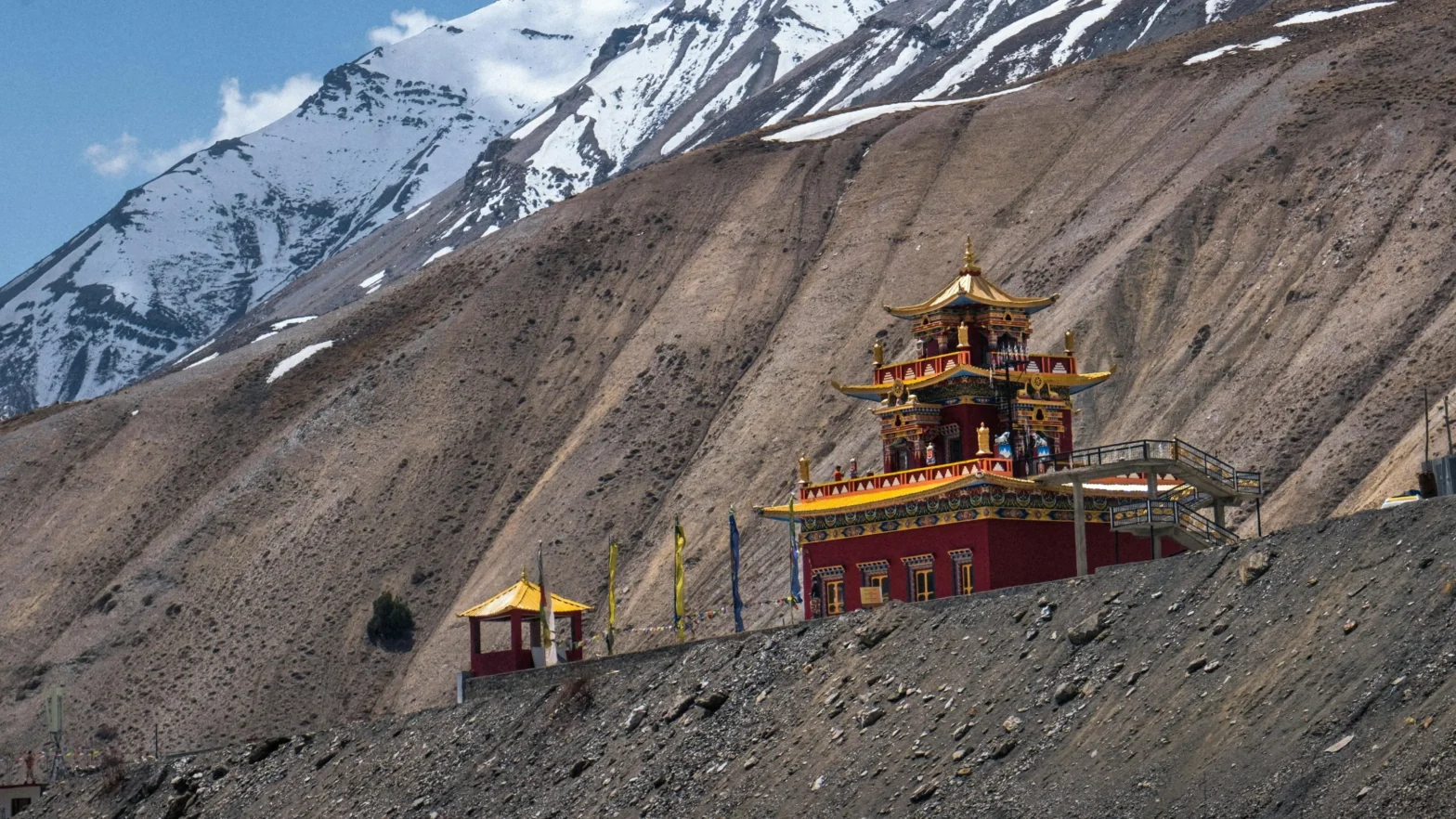
Spiti, Himachal Pradesh
Spiti is frequently called a cold desert, which is geographically accurate but emotionally inadequate. Deserts are expected to be empty. Spiti is filled with presence.
Villages appear as compact clusters of whitewashed homes beneath enormous mountains. Fields of barley and peas occupy narrow bands of improbable green. Monasteries stand above settlements, their walls the colour of the surrounding earth, as though architecture here prefers not to announce itself unnecessarily.
At Tabo, ancient temples contain murals, sculptures and painted narratives that have survived for more than a millennium. The complex feels intimate rather than monumental. Its treasures are encountered in dim interiors where the eye must adjust slowly. This enforced patience is appropriate. Spiti has never been particularly interested in instant gratification.
Ki Monastery rises above the valley in a seeming accumulation of rooms, passages and prayer halls. Dhankar occupies an even more precarious position, poised above the confluence of the Spiti and Pin rivers. One suspects the original builders possessed either great spiritual conviction or a striking disregard for level ground.
A meaningful journey through Spiti can be shaped around Buddhist art, Himalayan ecology or vernacular architecture. It might include conversations with monks about the monastery’s role in village life, visits to traditional homes, and walks through landscapes where geology appears to have become theatrical.
The region also invites reflection on change. Roads, communications and tourism have altered access to once-isolated settlements. Younger generations negotiate opportunities beyond the valley while communities consider how traditions can remain alive without becoming performances staged solely for visitors.
Travel here should therefore be measured. Stay longer. Walk where possible. Listen before photographing. Accept tea whenever it is offered, not only because this is courteous, but because the temperature may have developed hostile intentions.
Spiti’s great gift is perspective. It places human ambition against geological time and finds it rather charmingly small.