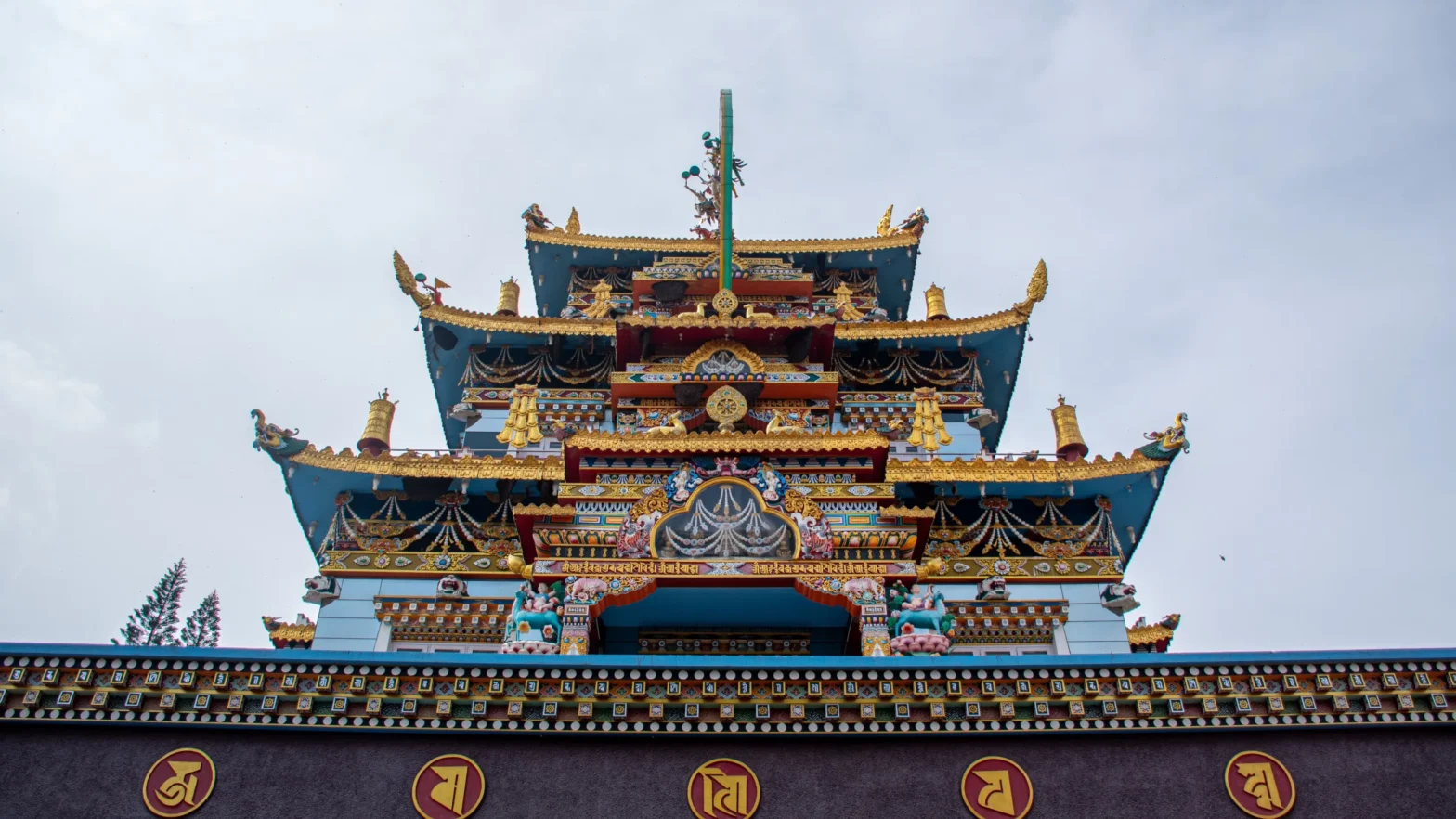
Bylakuppe and Mundgod, Karnataka
The journey to Bylakuppe passes through an unmistakably southern Indian landscape. Coconut palms, coffee plantations and fields washed in generous green stretch towards the horizon. Then, quite suddenly, monastery roofs rise above the trees.
It is an arresting change of scenery. Prayer flags flutter in Karnataka’s warm air. Monks in maroon robes travel between settlements. Shops sell incense, Tibetan bread, religious texts and the sort of woollen garments that require considerable optimism in this climate.
Bylakuppe was established during the 1960s as land was provided for Tibetan refugees to rebuild agricultural and community life. Over time, monasteries, schools, homes, farms and small enterprises transformed the settlement into one of the most significant centres of Tibetan life in India. The Namdroling Monastery, known for its richly ornamented temple interiors, is among its most recognisable landmarks.
Yet Bylakuppe should not be approached simply as an exotic visual interruption in the Karnataka countryside. Its deeper story concerns adaptation. Communities accustomed to high-altitude landscapes learnt to cultivate unfamiliar soil, negotiate a tropical climate and establish institutions capable of sustaining religion, education and collective identity.
A similarly compelling history can be encountered at Mundgod in northern Karnataka, where monastic institutions and agricultural settlements have developed their own rhythms. These are not museum cultures preserved behind glass. They are working communities in which philosophical education, domestic life, commerce and farming coexist.
The contrast between environment and architecture is part of the fascination. Golden roofs gleam against monsoon clouds. Butter lamps burn while palms sway outside. Traditional dishes are prepared with ingredients sourced from southern markets. Culture, one discovers, is remarkably inventive when asked to travel.
Bylakuppe also offers an instructive lesson for travellers. A destination need not be remote to feel revelatory. Sometimes the most intriguing cultural journeys begin when a familiar Indian road takes an unexpected turn and a monastery appears where the coffee estates end.