The Hemis Festival, Ladakh
The road to Hemis Monastery follows the Indus before turning towards a narrow valley of dun-coloured mountains. Ladakh’s landscape is famously economical. Rock, sky, river and light appear to have agreed that ornamentation is unnecessary. Hemis, however, has other ideas.
The Indie Trails team was recently in Ladakh and had the rare opportunity to experience and document the Hemis Festival first-hand. As the monastery courtyard filled with monks, pilgrims, families and travellers, what unfolded was not simply a spectacle, but a layered cultural text written in movement, music and symbolism.
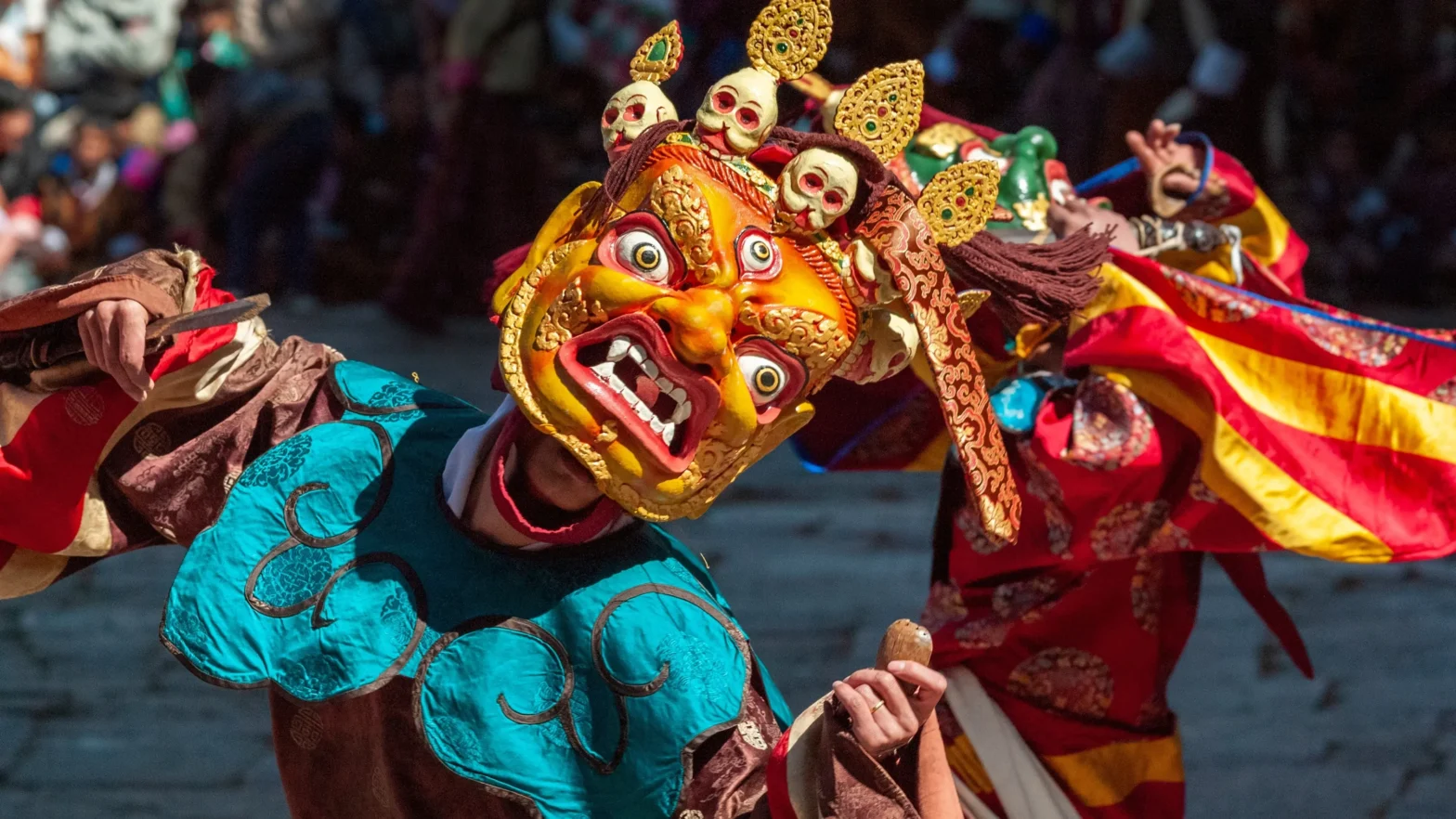
During the annual Hemis Tsechu, monks appear in brocade robes, towering headdresses and masks depicting serene divinities, wrathful guardians, animals and skeletal figures. Cymbals clash. Long horns release deep, resonant notes. Drums establish a rhythm that seems less concerned with entertainment than with rearranging the atmosphere.
The festival commemorates Guru Padmasambhava, the eighth-century Buddhist master associated with the establishment of Buddhism in Tibet. Its celebrated cham dances are not theatrical performances in the conventional sense. They are ritual narratives in motion, dramatising the victory of wisdom over ignorance and reminding those assembled that appearances, however terrifying, can be deceptive.
To the uninitiated visitor, the masks can appear extravagant, even faintly mischievous. Yet each gesture belongs to a highly disciplined symbolic vocabulary. Wrathful faces do not necessarily represent evil. In Buddhist iconography, ferocity may express compassion in its most uncompromising form. Apparently, even enlightenment occasionally needs to raise its voice.
Watching the dances at close quarters, the Indie Trails team observed how seamlessly ritual and community life converged. Elderly spectators turned prayer wheels while children searched for better vantage points. Monks moved through ancient choreography as families gathered, artisans displayed their work and cups of butter tea circulated with reassuring regularity.
The festival’s visual splendour is immediate, but its meaning reveals itself more slowly. Every mask, gesture and musical note belongs to a larger spiritual framework. What may first appear theatrical is, in fact, deeply contemplative.
Hemis rewards the traveller who arrives with curiosity rather than a checklist. The masks conceal faces, certainly. They may also reveal something about the selves we perform every day.